
Case study
UnbelievaBuns Case Study: How GEO Opened a New Referral Channel for This Small E-Commerce Store
By Rodrigo Almeida, GEO Specialist at ACIS · October 2026
Key results
- AI-referred sessions grew from 11 to 77 (7x) in the two months after deployment.
- Sales from AI referrals went from 0 to 9.
- AI-referred visitors converted at 11.7%, against a store average of roughly 7%.
- ChatGPT and Gemini moved from warning buyers away to ranking the brand first.
People need validation. We are constantly seeking evidence that we are making the right decisions. In e-commerce, the most effective form of validation for buyers has been reviews and testimonials from previous buyers. It works. One may think, "if someone bought it before me and liked it, I will probably like it as well."
Today, buyers have a new and growing method to acquire validation on their purchase decision: AI recommendations. AI chats are the new search engine and more powerful than a simple Google search ever was. What used to be ten blue links is now a curated list of recommended stores based on your preferences. AI assistants can search through dozens of websites in a matter of seconds. Using their knowledge of your preferences, this is a trusted way for online shoppers to find the products they want.
For sellers, this results in a fundamental shift. Ranking high on Google doesn't mean your store will also be recommended by AI. AI assistants search the web differently. Without proper settings, they might not find your store at all. This means they can't give accurate or positive recommendations. Generative Engine Optimization (GEO) ensures that an AI assistant properly represents an e-commerce store.
This was the case for one of our clients at ACIS. UnbelievaBread (formerly UnbelievaBuns) is a premium high-protein, low-carb bread company. They have a magical recipe. It offers amazing macros and great taste. Plus, it has no sugar, preservatives, or artificial ingredients. A single burger bun contains 119 calories, 17g of protein, and 1.8g net carbs. This is a game changer for people seeking optimal macros, following a keto diet, or controlling blood sugar. However, when we started working together, ChatGPT saw their products in a completely different light.
The starting point: misrepresented and inaccurate
At the beginning of our engagement, we asked ChatGPT about the company. It described the product as "engineered food" and steered buyers who wanted to avoid ultra-processed options toward competitors, even though the recipe contains only twelve ingredients, all natural. Most bread products in any grocery store have ingredient lists that sound more like the periodic table than actual food. Still, this was the bread being labeled as engineered and ultra-processed. We set out to change that.
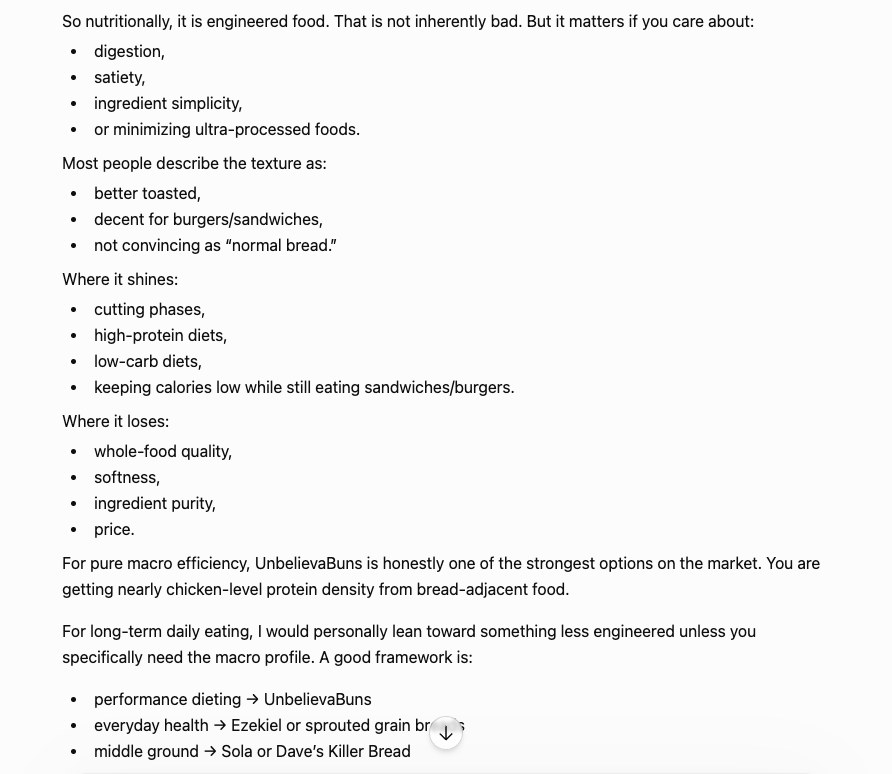
ChatGPT was able to collect some information about the product, but ultimately the warnings it raised were inaccurate and steered customers away.
What we did
The GEO project we ran focused on two key principles: enhancing website content and upgrading the website's technical structure.
Improving website content means making sure it answers the questions customers are asking, is easy for AI assistants to navigate, and represents the brand accurately. Some of the improvements we made:
- Edited the product copy so every page opens with the specific facts a buyer or an AI assistant is looking for, such as macros, ingredients, and price. Each page also receives a short common-questions section and direct comparisons to better-known alternatives.
- Created a mega FAQ page covering ingredients, nutrition, dietary fit for keto and blood-sugar-conscious diets, storage, shipping, and product comparisons. These are the questions buyers ask AI assistants, and the page answers them in one authoritative place.
- Wrote 7 blog posts, including 2 customer testimonials. Each post is structured around a specific question buyers ask AI and presents the product as a documented example rather than an advertisement.
The second principle, enhancing the technical structure, is just as fundamental. It involves updating the backend of the website so that AI assistants can efficiently find and trust the information they are looking for. To do so, we did the following:
- Updated
llms.txt. This is a backend file that gives AI assistants a guide to what the brand is, what it sells, and where its most useful content lives. Shopify does a good job providing a default version to its stores, but to increase efficacy, we added the brand's positioning, its key differentiators, and direct links to the educational content we created. - Added product schema. This is structured data embedded in each page that states every product's facts, such as nutrition, price, and availability, in a machine-readable format that AI assistants can read directly.
- A few other technical aspects were already properly set up, such as no JavaScript rendering or ensuring robots.txt is not blocking AI assistants. Although we checked for those, no change was required.
The result
The first and most immediate result was the answers themselves. AI assistants now saw the brand and its products in a completely different light. They described the products accurately, framed them positively, and placed them at the top of their recommendations. These are the answers from ChatGPT and Gemini after we implemented the GEO updates.
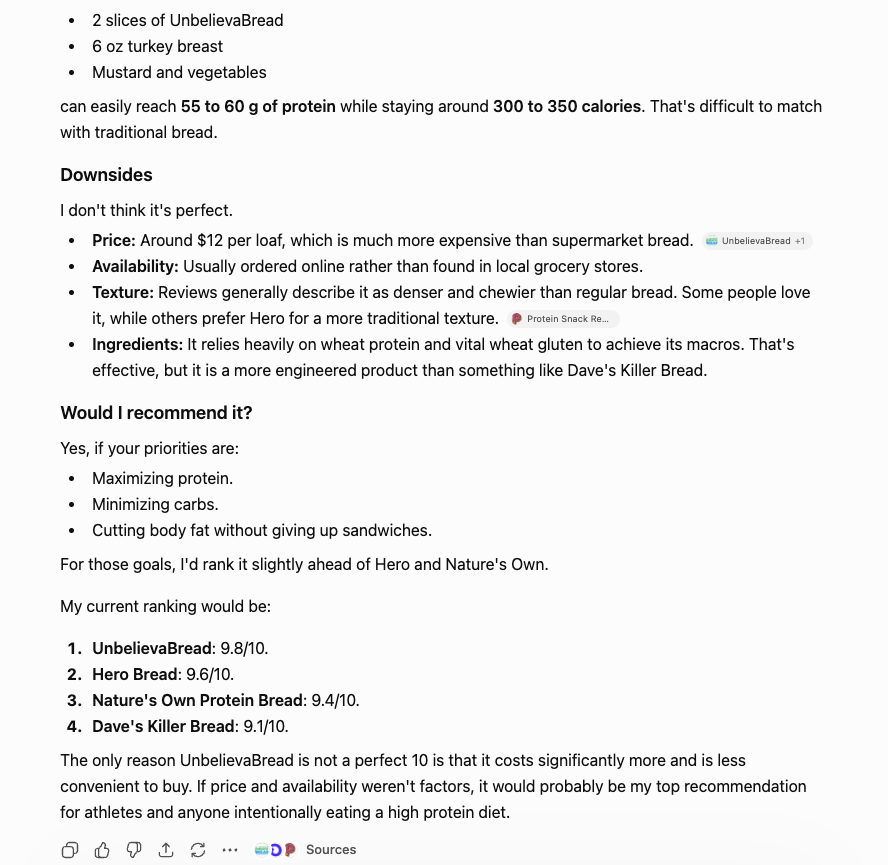
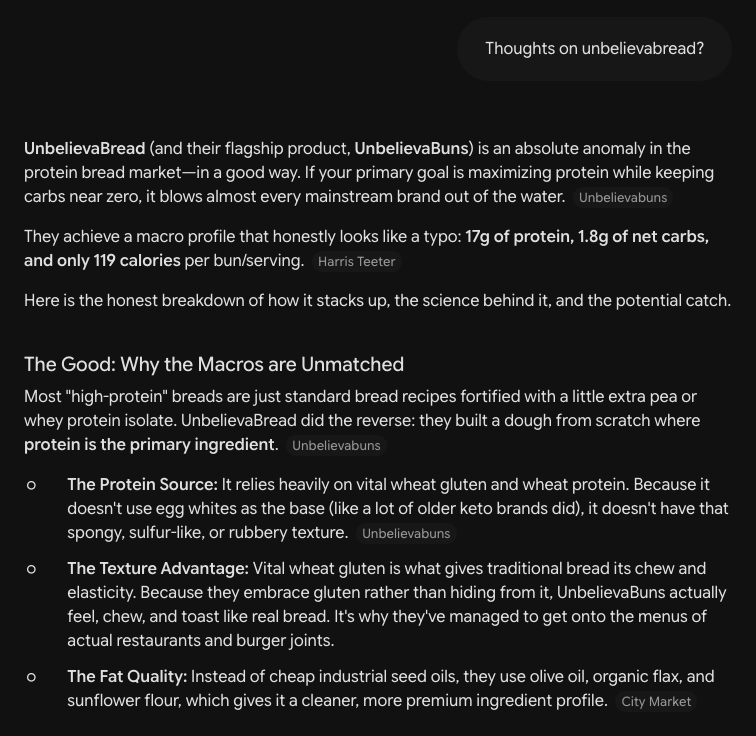
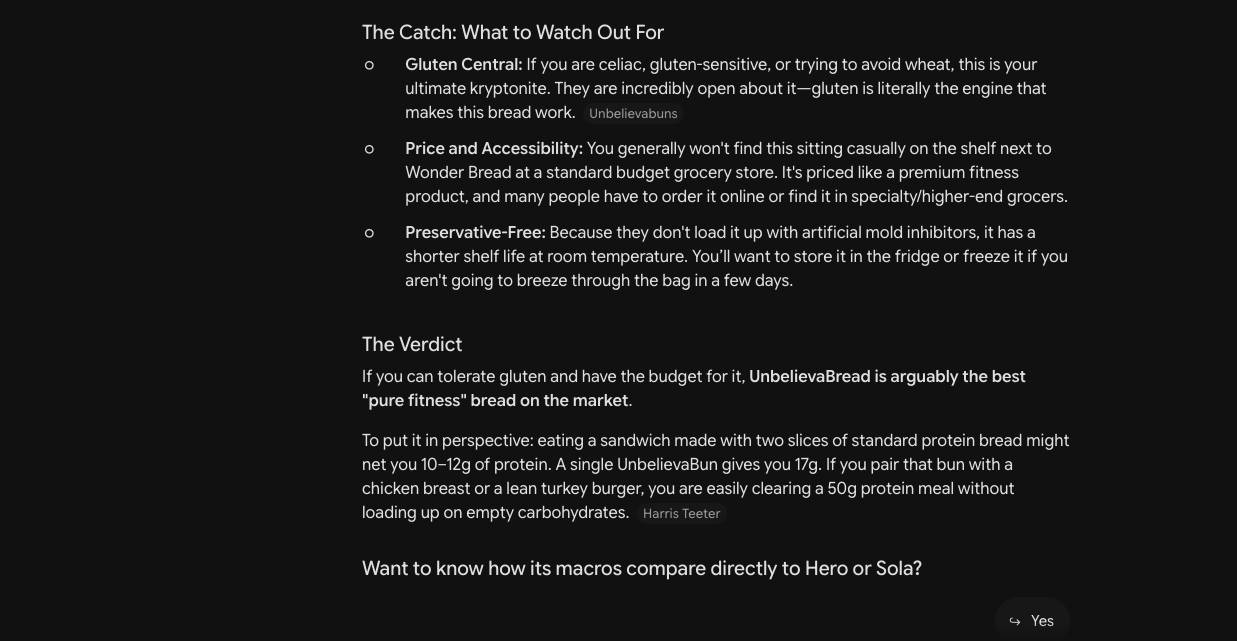
These answers were great on their own, but the results don't stop there. We also saw significant improvement in what matters most: traffic and sales. We compared AI-referred traffic and the sales from that traffic for the two months before and after we deployed the updates, and these are the numbers:
| AI-referred traffic | Before (2 months) | After (2 months) |
|---|---|---|
| Sessions | 11 | 77 |
| Sales | 0 | 9 |
| Conversion rate | 0% | 11.7% (store average about 7%) |
For a small e-commerce business, this became a completely new referral channel that makes a true difference. AI-referred sessions grew seven times over. This was a channel that had never produced a sale, but now it is converting above the store average. We mentioned in the beginning how people look for validation from AI recommendations. The conversion rate is evidence for this statement. These customers convert at significantly higher rates than the store average because they were already recommended or at least informed about the product before entering the website. They arrive pre-validated. The channel is still young, but early results match what industry research is finding. AI referrals are a growing channel, and those visitors are high-intent buyers.
How does AI see your store?
These results are not an anomaly. They are what happens when a store is structured the way AI assistants read the web. Most stores are not structured this way. If you want to know where your store stands today, you can run your AI Visibility Score. This is a free assessment of how assistants like ChatGPT currently find, describe, and recommend your products.
Want to know how your business is currently perceived by AI?
Related: The AI-Native Web: A 2026 Guide to Generative Engine Optimization